
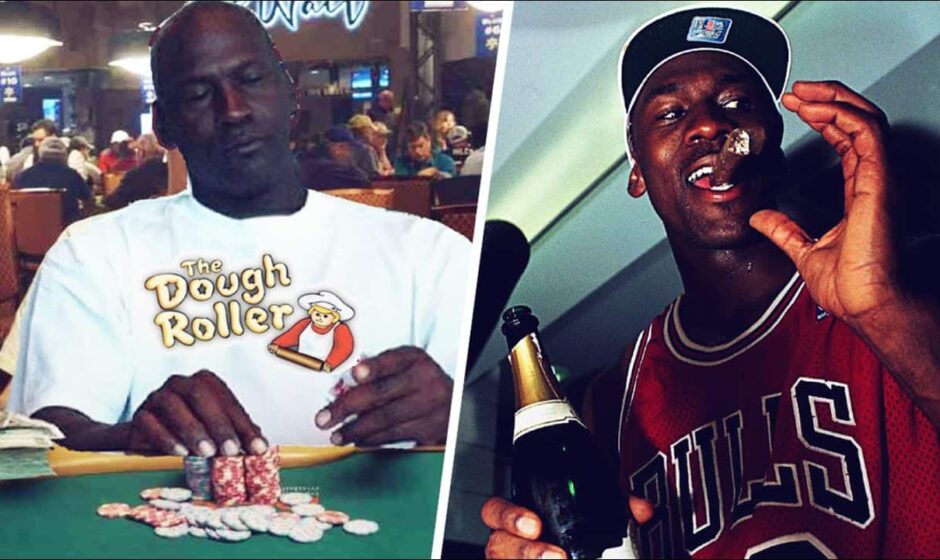

The topic of michael jordan gambling remains one of the most debated aspects of his legacy. He openly acknowledged having a problem, admitting it himself. The documented incidents span golf courses and Atlantic City casinos, and while none resulted in a suspension, the story is more complicated than a simple yes or no.
The NBA investigated Jordan’s gambling on two separate occasions – in 1992 and again in 1993. Both times, Commissioner David Stern concluded that while Jordan had exhibited poor judgment, there was no evidence he had bet on basketball games, which was and remains the league’s red line.
A Timeline of the Key Incidents
| Year | Incident | Outcome | Source |
|---|---|---|---|
| 1991 | Jordan wrote a $57,000 check to James Bouler, a convicted drug dealer, described as a golf bet payment | Bouler convicted on drug charges; Jordan’s check used as evidence of the debt | Court records, ESPN |
| 1992 | Jordan seen in Atlantic City casino the night before a playoff game vs Cleveland | NBA investigated; no violation found – gambling is legal for players | Multiple reporters, NBA |
| 1993 | Richard Esquinas published book claiming Jordan lost $1.25 million to him in golf bets | Jordan acknowledged betting but disputed the amount; settled privately | Esquinas book, press coverage |
| 1993 | NBA launched second investigation after Esquinas book release | Stern found no evidence of basketball betting; described behavior as ‘not in best interests’ | NBA official statement |
| 1993 | Jordan’s father James Jordan murdered in July; Jordan retired in October | Retirement widely speculated to be gambling-related; never proven | Multiple outlets |
| 2005 | Jordan confirmed gambling problem in documentary and interviews | Described it as a ‘competition problem’ – said he would bet on anything competitive | ESPN, 60 Minutes |
The Richard Esquinas Story
In 1993, Richard Esquinas published a book called Michael & Me: Our Gambling Addiction… My Cry for Help. In it, he claimed that he and Jordan had played high-stakes golf for years and that Jordan had accumulated a debt of $1.25 million.
Jordan did not deny the golf games or the gambling. He disputed the figure. He said the losses were closer to $300,000 and that the debt had been settled at a fraction of what Esquinas claimed. The two reportedly reached a private settlement, and no legal action followed.
What made the story damaging was not the amount – it was the portrait it painted. Jordan was gambling for stakes that most people could not comprehend, with someone he barely knew, apparently unable to stop escalating.
Jordan’s Own Words
Jordan has been more candid about gambling than most people in his position would be. In interviews and in The Last Dance documentary, he pushed back on the word addiction but acknowledged the compulsion clearly.
He described his gambling as rooted in his hyper-competitive nature. Sitting still made him restless. Golf, cards, and dice gave him something to compete at when basketball was not available. He framed it as an extension of the same drive that made him great at basketball – which is a convenient framing, but also possibly true.
‘I have a gambling problem,’ he said. ‘If you consider it a problem to want to compete at everything.’
The Atlantic City Controversy
The most explosive gambling story during Jordan’s active career came in May 1993, the night before a playoff game against the Cleveland Cavaliers. Jordan was seen in an Atlantic City casino, reportedly playing cards until 2:30 a.m.
Jordan scored 36 points the next day. The Bulls won. The NBA investigated and found no rule violation – players are not prohibited from visiting casinos. But the optics were terrible, and the story fed a growing narrative about Jordan’s relationship with gambling that the league was increasingly uncomfortable with.
What the NBA Actually Found
Commissioner David Stern was clear in his conclusions from both investigations: Michael Jordan had not bet on NBA games. That was the line that would have triggered a suspension or worse, and there was no credible evidence he crossed it.
Stern did describe Jordan’s behavior in the 1993 investigation as ‘not in the best interests of the NBA’ – a strong rebuke from a commissioner – but stopped well short of any official penalty. Jordan remained eligible to play.
Did It Affect His Legacy?
The gambling stories have never seriously dented Jordan’s standing as the greatest basketball player of all time. They are a footnote, not a chapter, in how most fans remember him.
What they do offer is a fuller picture of the man behind the brand. Jordan’s gambling was not a crime, was not proven to compromise basketball, and was eventually acknowledged by Jordan himself as a problem he managed. It is part of the honest account of who he was – complicated, compulsive, brilliant, and occasionally reckless.
The most human thing about it, perhaps, is that the same competitive fire that made him unbeatable on a basketball court made it genuinely difficult for him to walk away from a card table. The coin has two sides.